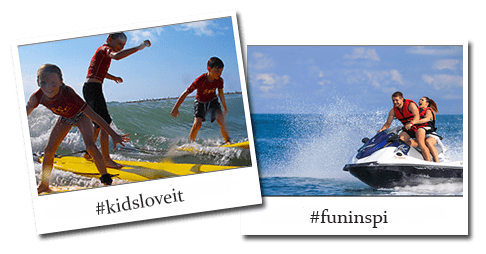
Welcome to South Padre Island, the Tropical Tip of Texas! Enjoy live cam views of our beautiful beaches with the South Padre Beach Cam™, the surf in the Gulf of Mexico with the South Padre Surf Cam™, and the sunset over the Laguna Madre with the South Padre Bay Cam™! Check live South Padre weather conditions and forecasts, pictures, video, and daily updated surf and beach report. Book South Padre hotels, condos, and vacation rentals, check out South Padre real estate listings, watersports and activities, dolphin watch, parasailing, restaurants, RV parks, or charter a fishing trip. Plan your family vacation, South Padre Island beach wedding, or Spring Break to South Padre Island on Spadre.com!


New
Live Stream Cam
SPadre.com South Padre Island Live Streaming Cam
The only web cam that sees it all! The newest most powerful streaming pan/tilt/zoom camera ever built, Canon's VB-C60. With user controls to view the beach, surfing area, jetties, Boca Chica, Dolphin Cove, Queen Isabella Causeway, Laguna Madre, sunrise and sunsets over the Bay and Gulf, even 24hr night views of the Island and surf.

 
SPadre Mobile

SPadre.com Mobile Surf Cam

Check the Surf Cam from your cell phone, iPhone, Blackberry or other mobile device! New fast loading mini mobile pages with all cams, beach and surf report, buoys, weather forecast, news, and other essential data.


RSS South Padre Island Beach and Surf Report
South Padre Island Beach and Surf Report now available in RSS. Subscribe to the feed, or embed the RSS feed on your website, blog, MySpace, Facebook, etc.

SeaGypsy Photographs - South Padre Island Surfing Pictures, nature, birding and more


Travel Guide


Get a copy of the 2009 Guide to South Padre Island for free visitor information by mail.


South Padre Beach Cam
South Padre Beach Cam - Click for new 8x zoom super high resolution mega beach cam - new image every few seconds
Click for large high resolution live cam / South Padre Beach Cam™


Bookmark and Share
Embed:
Subscribe to Beach and Surf Report RSS feed Subscribe to this feed


South Padre Island Beach Resources
  • Beach Access Map
  • Weather
  • Tide/Moon
  • Ocean Safety
  • Rip Currents
  • Flag Advisory
South Padre Island Beach Access Map
South Padre Island beach access map
Before you jump into the waves, take a few minutes to read this important water
safety information and discuss it with your family and friends, it may save your life!!


OCEAN SAFETY RULES

1. WEAR A LIFEJACKET IF YOU DON’T SWIM WELL
2. LEARN TO SWIM
3 . BE AWARE OF RIP CURRENTS
4 . OBEY WARNING SIGNS AND FLAGS
5 . HAVE AN ADULT CHECK CONDITIONS FIRST
6 . DON'T SWIM ALONE
7 . STAY IN SHALLOW WATER DURING HIGH SURF
8 . NEVER LEAVE CHILDREN UNATTENDED
9 . DO NOT SWIM NEAR THE JETTY
10 . DON'T USE INFLATABLES IN THE SURF
11. DON'T OVERESTIMATE YOUR SWIMMING ABILITY
12. DON'T DRINK AND SWIM

NO GLASS BOTTLES ARE ALLOWED ON THE BEACH.
DON'T LITTER.
PICK UP SOME TRASH THAT ISN'T YOURS.


Local Emergency Numbers

CALL 911 first for any emergency.
South Padre Island EMS (956) 761-5454
Cameron County Park System (956) 761-5494
U.S. Coast Guard Station South Padre Island (956) 761-2668
Cameron County Parks Police (956) 761-5283

  • Rip Currents
  • Rip Current Index
  • Undertow
  • Currents & Tides
  • The Jetties
Rip Currents are common, be aware!
Rip current information
Rip currents (mistakenly called rip tides or undertows) are common and can be found almost daily on all South Padre Island Beaches. RIP CURRENTS KILL SWIMMERS EVERY YEAR HERE AT SOUTH PADRE ISLAND. Rip currents occur around the world at "surf" beaches, including both the Atlantic and Pacific coasts, the Great Lakes, and the Gulf of Mexico including South Padre Island. Rip currents are also the #1 cause of drownings. If you are caught in one, how you respond could make the difference between life and
death. Unlike undertows, rip currents are shallow water processes that do not pull a person under. They form when water, piled against the shore, begins to return to deeper water. Typically, strong wind and swell waves push water over a sandbar allowing excess water to collect. Eventually, the excess water starts to return seaward through low areas in the sandbar, "ripping" an opening. Rip currents can be readily seen from the shore. You can spot a rip current by looking for objects or foam moving steadily seaward. Wave heights are also lower and choppier in rip currents. Since rip currents are NOT undertows, you can be pulled away from the shore but not pulled under the water. The most common mistake drowning victims make is to panic and try to swim directly toward the shore. Even the best Olympic swimmers are not able to successfully swim toward shore in the strongest rip currents. If caught in a rip current, simply remain calm and swim or paddle to the side and the surf will push you back towards shore. Do not hesitate to call for assistance.

Rip Current Index
Rip Current Outlooks use the following, three-tiered set of qualifiers:

Low Risk - Wave Heights 0-2' and/or Wind Speed less than 10 kts.
Wind and/or wave conditions are not expected to support the development of rip currents; however, rip currents can sometimes occur, especially in the vicinity of groins, jetties, and piers.

Moderate Risk - Wave Heights 3-5' and/or Wind Speed 10-20 kts.
Wind and/or wave conditions support stronger or more frequent rip currents. Only experienced surf swimmers should enter the water. Use a lifejacket, bodyboard or flotation device.

High Risk - Wave Heights 6'+ and/or Wind Speed greater than 20kts.
Wind and/or wave conditions support dangerous rip currents. Rip currents are life-threatening to anyone entering the surf. Stay in waist deep water or less!

-Rip currents are NOT undertows, you can be pulled away from
the shore but not pulled
under the water.
-If caught in a rip current, simply
remain calm
and swim or paddle to the side and the surf will push
you back towards shore.

undertows
Undertow is a concern mostly for weak swimmers or the unfortunate non-swimmer. An undertow occurs when a wave is about to break on a shallow sandbar where a swimmer might be standing. The water will suck underneath the wave as it breaks. This "undertow" can sweep a weak swimmer off of their feet and into deeper water, and he may panic as the wave crashes over his head. The undertow disperses almost immediately until the next wave approaches, then the cycle starts again. An undertow can drown a person just feet from safety.
 
Riptides are found in channels, passes and cuts through which large volumes of water travel from the bay to the surf during the tidal exchange. Normally swimmers are not found in these areas. Rip currents are commonly and mistakenly called riptides.

Longshore Currents are simply the current that moves along the beach, usually in the direction that the wind is blowing or the waves are breaking. You will notice the longshore current as you enter the water, causing you to drift along the beach. These currents can run as fast as 3mph. Not a hazard for swimmers, unless there is a north wind, the longshore current will sweep you towards the jetty where it will become a rip current sucking out to sea.

The tide plays an important factor in water depths in the surf. The tide range, or difference between high and low tide varies between 1 to 3 feet. High tide will cause more powerful waves to break closer to shore and deeper water near shore. A low or outgoing tide can greatly increase the rip current risk.

If the rocks are wet from waves,
DO NOT walk any further!


South Padre Island's North Jetty - Great Fishing but use EXTREME CAUTION
Jetties - Located at the southern tip of the island in Isla Blanca Park, the jetties are not designed for public access, although it is allowed. Never swim near the jetty. Many people have been swept off the rocks and injured or swept out to sea in the strong rip next to the jetty while attempting to walk out the jetty during high surf. The granite boulders are barnacle encrusted and urchin infested. Always bring some type of flotation device to be used for rescue in case someone falls into the surf. There is a strong rip current located next to the jetty. This rip current is the strongest and most dangerous on the entire Texas coast, and on big days it can suck you out to the end of the jetty into the "pit" where the biggest waves will break, and likely wash you back onto the rocks. If you get caught in the rip, simply remain calm and swim or paddle to the side away from the jetty and the surf will push you back towards shore. Do not hesitate to call for assistance.


Flag Advisory System

Surf Conditions

FLAG ADVISORY SYSTEM

sistema de aviso con bandera
....
-heavy surf
-dangerous currents
-oleaje fuerte
-corrientes Peligrosas
....
-calm to moderate water
-does not mean safe water
-agua calmada a moderada
-no asuma agua segura
....
-presence of
venemous marine life
-presencia de
vida marina venenosa
Absence of flag does not assure safe water
La ausencia de banderas no asume
condiciones de agua segura
Dial 911 for emergency
Marque el 911 para urgencias

As you enter beaches you will notice the Flag Advisory signs.


South Padre Island Beach Information
  • Beach Information
  • Nature Report
About Our Beaches
South Padre Island - the best beach in Texas! South Padre Island, the gem of the Texas coast boasts miles of tropical beach front resort shoreline and a warm family friendly atmosphere that is perfect for your beach vacation. The warm waters of the Gulf of Mexico make your action packed vacation a dream come true. At the southern tip of the 600 mile stretch of Texas beaches, the warmest waters of the entire Gulf of Mexico meet the tropical climate of the South Texas coast, making South Padre beaches a great destination year round. And with planned activities and events such as surfing competitions where you can watch the states best surfers effortlessly ride the waves, sand castle days where the worlds top sand castle builders meet to battle it out with amazing artistic creations you can not only watch but join in on the fun with amateur sand castle competitions and free sand castle lessons. The ever popular Bike Fest also known as Roar by the Shore where you'll see thousands of Harleys and other decked out motorcylces parade down the boulevard, some of the nations biggest fishing tournaments including TIFT and LKT, pirate days, kite fest, sporting events, market days, and other seasonal events - there's always something going on in South Padre Island. Seaside you can enjoy a dolphin watch or a narrated cruise and eco tour of the surrounding Gulf waters of South Padre Island and the Laguna Madre bay. And when you come ashore, visit Sea Turtle Inc, the sealife and dolphin research center, or the coastal studies lab and marvel at the aquatic life of the South Texas Gulf Coast and the Atlantic Ocean. While enjoying the ocean waters, waves, and sand dive into some popular water sports in South Padre include surfing lessons, windsurfing, kayaking, kite boarding, and jet skiing, parasailing, banana boats, and fishing. Beach side activities feature sand castle lessons, horseback riding, atvs and more. While off of the beach you can indulge in some of the freshest seafood (if you've never had the lobster sized Gulf Coast Shrimp you really ought to try!) or Island shopping. Nightlife is plentiful featuring beach front cabanas or bayside tropical bars where you can have a cocktail and watch the sunset, dance, join in for some karaoke, or watch your favorite sports at the local sports bar. Each year during the month of March, the small quiet seaside town of 2,400-population fills in with ten times that many college girls and boys as the beaches of South Padre Island has become one of the most popular Spring Break destinations in the nation. Isla Blanca Beach Park, a great family beach features 2 large pavilions, complete with a playground, snack bar, bait stands, umbrella and chair rentals, and surfing lessons. The park has a new boat ramp, rv park, tent camping area, and a long rock jetty offering great fishing. Local catches include snapper, flounder, red fish, trout, grouper, snook, tarpon, and kingfish. The dolphin and sea turtles are plentiful and make daily appearances around the jetty in the ship channel. Watching the shrimp boats cruise in and out of the safety of the calm bay waters as they venture offshore is magical. Watching the boats and fisherman come back in safely can be even more beautiful. The Christo de los Pescadores statue is a shrine built to memorialize those brave fishermen that were lost at sea and proudly stands with arms outreached at 30 ft tall. Traveling to the north side of the Island, there are miles of even more beautiful beaches stretching for 28 miles of unspoiled sandy coastline. The national seashore feature the barrier Island beaches that offer incredible shelling, camping, and is the perfect setting for a romantic evening, spectacular sunset and private strolls up the beach. At the end of the stretch of empty coastline lies another jetty and small boat pass where it is said that a couple of Spanish Galleons where known to have sunk close to shore and treasure hunters have lucked into some incredible finds. Stop by the local Beachcombers Museum and you can see various treasures found along the beaches of South Padre Island. Along with some of the most popular beaches in the country, you can explore some of the nation's best bird watching sites at the new world birding center, learn about endangered sea turtles at Sea Turtle, Inc. the local sea turtle hospital and research facility. Across the Bay and just a few mile drive from the shores of South Padre lies the old port town of Port Isabel where you can still visit and climb the historical Port Isabel lighthouse. Driving across the Queen Isabella Causeway you'll catch a breathtaking view of the city and bay. Or for golf enthusiasts if a golf course is what you are searching for then don't worry as the South Padre Island Golf Club is the finest in the Rio Grande Valley. There really is something for everyone in South Padre Island!

Offshore, A Small Deep Water Shark Causes Injury to Dolphin by Scarlet Colley

One of the smallest sharks on earth can be a real pest to other sea creatures including dolphins. This little shark, part of the dogfish family, with the scientific name of Isistius plutodus, is just under twenty inches in length. The males are about four inches smaller than the larger female. They live in the Gulf of Mexico and other parts of the world in deeper water and it is thought that they can go up to two miles deep in search of food. This little monster is called a cookie cutter shark and a little monster it is to its prey. The reason for this odd name is its tactics to obtain its food. This shark is almost invisible from the underside, using luminescents, except for a dark spot on its throat. The rest of its long, thin cigar like body disappears, blending in with the light from above. It is very much like putting on an invisible cloak, with just a small shape showing dark. The fish see it as a smaller fish and as the fish attacks, the shark counter attacks and goes in for the meal. Its teeth are set up just perfect to allow it to grab the side of the fish, clamp down, spin around and take a round chunk of meat away with it as it swims off. It does not kill the fish but leaves a nasty cookie cutter shaped hole that will eventually heal. Twenty or so huge, razor sharp teeth line the lower jaw of its small mouth and the shark will swallow its own teeth when in need of calcium. Its lips also act like a suction cup to help insure its grip while the upper teeth are tiny allowing it to spin around. Using its upper teeth to hold the chunk of flesh, it then scoops out the meal with its lower teeth after making its spin. This little menace can cause our dolphins to have a nasty little hole in their sides and undoubtedly it is painful. We know our dolphins have taken a jaunt off shore to come home with this type of injury, for the Cookie Cutter shark likes deeper water and therefore is no menace in the bay or inshore waters. Sometimes we have offshore dolphins that come into the bay area for a few days and you can see that they have more healed bites on them than our inshore dolphins have. We see Remora’s, which are a fish that latch on with a suction cup to the dolphins, but cause them no harm and are just an aggravation. We have never seen a Cookie cutter shark in the bay but have seen plenty of Remora’s attached to our dolphins. We are not sure if other dolphins in the family group help out the dolphin being attacked by a Cookie cutter shark but we feel that looking at the wound and the way it healed on this dolphin that the shark may have been dislodged before it could make its get away with the entire plug of flesh. It looks as if some of the flesh remained and healed over. The size of the holes is about the size of a small biscuit. It also looks like this could be a cookie cutter shark that may have ridden in with this dolphin. It was so long and thin, almost tubular looking compared to the remoras shape that we usually see. The remoras are so quick that other dolphins attempting to dislodge the pesky fish just end up playing tag with it. We have seen many dolphins leap into the air and belly flop in an attempt to dislodge a remora.


Scarlet and George Colley of South Padre Island's "Fins to Feathers" have been filming and documenting their dolphins for eight years. They operate a tour business on the Island and write seven articles a month for local papers on the nature of the Island.

Cell Phone: (956) 739-BIRD [2473] Home Phone: (956) 761-7178
Email: skimmer@fin2feather.com


More Nature Report Articles by Scarlet and George Colley of the South Padre Island Dolphin Research and Sealife Center

Dolphins

The Valley is rich in the diversity of its mammals, including the smaller inshore dolphins of South Padre Island. They live in the rich waters of the Laguna Madre Bay and the inshore waters of the Gulf of Mexico, along the beach of South Padre. They breathe air and nurse their young. Not a fish but a kindred spirit of the water, they are the Bottlenose Dolphins of the Rio Grande Valley, Tursiops Truncatus. These dolphins have adapted to the shallow
waters of the Laguna Madre and are therefore smaller than their offshore cousins which can reach lengths of 12 feet. Inshore dolphins grow only seven to nine feet in length, making it easier for them to get around in the shallows. Their weight is considerably less as well, averaging about 400 pounds, in comparison to their offshore compatriots, which can weigh as much as 600 pounds.
There are five major family groups of about 25 members apiece of these inshore dolphins, each led by a wise matriarch. The matriarch plays an important role in leading the group, using the experience and knowledge passed on to her by a previous matriarch. The matriarch dictates what the group will do at different times of the day, whether it be feeding, sleeping or playing.
Protected by the Federal Government these wild dolphins lead their lives safely in the bay and gulf waters. They are “fishatarians” eating a variety of fish such as mullet, sheepshead, ribbonfish and many others. They consume up to 10 percent of their body weight in fish per day.
Dolphins are big-brained animals, as are we, and can learn to adapt to changes in their environment. They populated Valley coastal waters long before the arrival of humans and must have led a much quieter life with no sounds of human activity on their waters. But they have learned quickly with each successive generation to adapt to the new creatures in their world and also to the new threats they bring with them (such as wave runners). Now their daily activities even include playing with these two-legged interlopers. After all, they share something very special with their human counterparts…emotions. They react to people reacting to them. And they have had years to get to know the people on their waters.
A unique feature of inshore dolphins is their more highly developed ability to use echo location when compared to most offshore dolphins. Bay waters are often murky and inshore dolphins cannot use their eyes to see as the offshore dolphins are able to do in the clear blue water of their environment. Echo location serves as sonar that allows the inshore dolphins to see much as we see on a sonogram. Quite often they will feed in the murky water in preference to the clear water nearby because, while the fish cannot see them, they can “see” the fish using their echo location.
These amazing creatures live up to 40 years in the wild. Since they have only one set of teeth during their lifetime, their age can be determined by counting the rings on a half section of one of their teeth, similar to counting the rings of a tree stump. They have a great memory base as humans do and have learned to recognize different boats and even the people that spend time with them. We can easily recognize individual dolphins by the dorsal fin on their
backs. They can range in color from white to black. The mothers and babies stay together while the young males of four years old and up band together and are taught how to behave together by the older male bulls. The matriarchs share their wisdom with matriarchs in training so that knowledge can be passed down from generation to generation.
Mothers keep their babies at their sides for three to four years before they have another baby. The gestation period is 11 months, and, if the first baby is a female, she will help her mother raise the next baby, learning to become a mother herself someday. If the baby is a male he will go on to the male group. A mother and baby can often be seen alone together, spending a little quality time away from the main group, but later they join re-join the other family members.
The babies have much to be taught as they grow, not unlike the time spent raising a human baby. One dolphin year counts as two human years, making an eight-year-old dolphin similar in age to a sixteen-year-old human. Dolphins will have as many as five or six children in their lifetime. The females raise the children while the males lead separate lives in their own groups as they reach maturity which is about seven or eight, but they will still intermingle with their family groups, visiting mothers and siblings. Nacho, a white female, brought her baby up to the boat the day he was born. Nacho’s son Titan is now six years old, and even though he is officially in the male group led by Frosty, he still spends time with his mother now and then. He has been filmed and documented since the day he was born.
It is illegal to feed, touch or swim with dolphins in the wild, but interacting with humans by sharing emotions is both legal and welcome. They react to human emotions of joy and, if they are not sleeping, eating or on a mission at the time, they will share emotions through play. They don’t have to bring their eyes out of the water to breathe, so when they do they are looking at their onlookers. They recognize people and enjoy seeing reactions to their play. They will tussle around, much like schoolboys on a playground. They even play with things in the water such the Cabbage Head Jelly fish and Sargasso Seaweed or even their food. Throwing fish around is not an uncommon sight.
Mothers will give their babies permission to play when they are old enough, too. It is a joy indeed to see the babies playing together under the watchful eyes of their mothers.
The joy that Dolphins bring to humans is very special, and there is no question that the bond between humans and dolphins is on the emotional level. Here is a species of mammal that shares the same emotions with their family and friends as humans do with theirs.
Much as the human families of the Valley go about their daily business, so do the dolphins of the Laguna Madre Bay. They spend their whole lives here and matriarchs such as Can Opener, Dottie and Jasmine, have enjoyed long and prosperous lives leading their families. Frosty, the male bull, leads the younger males, Sharkey, Nicky, Titan and many others by sharing the knowledge
gained during his long life. Having been out on the water with these dolphins for eight years filming and documenting them has been a wonderful experience, and they have become very much a part of our family. There are five major family groups that we recognize and have come to know well. One thing is certain; they are a part of the Valley’s nature ecosystem of which we can all be proud.

Jellyfish
 
Portuguese man-o-war and Portuguese man-o-war fish in the fish bowl. These fish live in the tentacles of the
man-o-war and are immune to its sting.


The moon jelly ( Aurelia aurita) also washes ashore in large groups and look like a flat clear pancake with a pink four leaf clover shape inside of it, which is its stomach. They have very short tentacles and are not as harmful as the sea nettle. The sea nettle is a jellyfish that has long tentacles and can give quite a sting. There are tiny hyperdermic type needles called nematocysts, along the tentacles, which fire off on contact and inject a substance that would normally incapacitate a fish. For the human flesh it stings like fire. Another jellyfish that packs a wallop is a sea wasp (Chiropsalmus quadrumanus).

True to its name it is like being stung by wasps when coming into contact with its tentacles.
Some jellies light up and are luminescent. The sea walnut (Beroe ovata) is the size of a large pecan and if put in a cup of water and watch carefully, the beautiful rows of colored lights glow in a wave up and down the sides of the creature. They are easily overlooked they are so clear and small.
Jellyfish are not too much of a problem here on South Padre but do watch out for the purple bubble the Portuguese Man O War. Its long purple tentacles sting with no mercy. It’s best to just look and not touch these beautiful creatures. We don’t want to have close encounters of the stinging kind when around the ocean, but jellyfish are wonderfully beautiful and mysterious creatures of the sea.

Portuguese Man-O-War
Photo Nancy Patterson

( note: first aid for jellyfish - rinse with fresh water, in most cases the sting may be treated with vinegar and unseasoned meat tenderizer mixed in a paste, applied directly to the sting. Reactions vary in individuals.)


Sargasso Seaweed

The Sargasso Seaweed is wonderful and is a floating city when out on the water. It is a city for a variety of marine life and sea turtles. As it is blown into the Gulf of Mexico on the north winds, it eventually ends up on the beach and in the bay. Most of the fish have enough sense to swim out to more of it as the seaweed hits the breakers. Some of the little creatures cling on for dear life and end up on the beach where, to the delight of the shore birds, they pick thru it and eat the little shrimp and crabs that didn’t bail out in time. The Seaweed then becomes a great natural way to keep the beach in place as it sinks down into the sand and helps to hold the beach in place. Sweeping it up to please the beach goers in the long run may have the beach goers crying “where is the beach” as the beach slowly erodes away. This seaweed has piled up on these beaches for hundreds, even thousands of years and helps to renourish the fragile beach ecosystem.
The creatures that live in the Sargasso are very unique and have adapted well to their floating city. Most of them are the same orange color of the seaweed itself.

The Sargasso fish is perfectly at home being the same color and having adapted foot like fins that crawl thru the seaweed looking for a meal. It can consume a fish the same size as itself.

Sargasso Fish

The Sargasso File fish uses its file like fin to hold itself in the seaweed.

Sargasso File Fish

The Sargasso Seahorse and its relative the Pipefish are also that great golden orange color.
There are nudibranchs and anemones, Sargasso crabs and shrimp.

Sargasso Nudibranch blending into the sargasso seaweed

Other creatures also use the Seaweed as a nursery for their young such as Southern Hakes and Butterfish and many exotic fish such as tiny flying fish are found in this unique Sargasso. The reason this seaweed floats is that it has hundreds of tiny air filled sacs that you can pop like bubble wrap. If you pick it up on the beach just as it floats in and give it a shake you can see the little shrimp and crabs that are hiding in it. If you take a small cup to the beach with you and fill it with sea water, then shake the freshly beached sargasso over it the tiny creatures will fall into the water and you can enjoy seeing them.
Also you can help save wildlife by picking up trash on the beach and disposing of it in the trash cans provided by the city and county.

If you would like to see the creatures that live in this unique seaweed and learn more about how to help save wildlife call 956-454-4799 to visit the South Padre Island Dolphin Research and Nature Center, a non profit organization dedicated to helping save wildlife of South Padre Island through education.

Dolphin Research and Sealife Nature Center

South Padre Island Dolphin Research and Sealife Nature Center has now opened on South Padre Island. The Non Profit Organization is located at 105 W. Pompano. The research and nature center will be open everyday at 1:00. At 1:00 we will feed the sea creatures and discuss their unique habitat. Children can help with the feeding. All the dolphins in the area are in the wild and the eight year research of South Padre Island’s Bottlenose dolphins will be on display in the form of photo’s, videos, books and presentations by the research team. Trips by boat with the research team to visit their wild dolphin study group are available thru the research center daily.

Tours of the facility can be arranged for large groups at other times of the day. The nature center has hands on touch tank tidal pools for everyone to experience live marine life and learn about live shells, hold a starfish and hermit crab and other invertebrates. Educational displays will help inform all on how to save wildlife and protect it.

The center will serve as a birding information center for all birders to report sightings or to answer questions about local birds in general. A birding rehab program is also in the works. There is an eco-friendly gift shop meaning no marine life will be put to death to sell as souvenirs. The gift shop will help raise funds to operate the Research Center. There will be plenty of dolphin related gifts, jewelry and photos in the gift shop area.

An Adopt-a-Dolphin Program is in place to help raise funds for the Research Center and donations and members are needed to get this new non-profit organization up and running. Quarterly news letters will keep members informed on latest news on our dolphins and nature of South Padre Island and the Laguna Madre.

There will be educational programs set up and scholarships given as the center raises the funds. The opportunity to learn about nature with a view of conservation and future needs of wildlife will be a focus. There will be story telling hours so everyone interested can get together and share stories about their nature experiences such as fishing, shelling, dolphin encounters, birding, and many other topics. Also this center will serve as a nature report center for any sighting or events seen, from a deceased animal to injured animal or abusive behavior to wildlife. Ultimately this center will be a place everyone can share their love for the nature of the area and learn how to help take care of it. The phone no. is 956-454-4799 or 956-761-7178. This research and nature center, Sea Turtle Inc. and the University of Texas Pan Am Coastal Lab provide South Padre Island with three very informative and educational centers on the nature of South Padre Island to help create eco friendly and informed tourists and visitors and residents.

Save our Ocean Wildlife

Keeping an eye on nature is for the most part an uplifting and fun part  of l my life, but there are times when it can be very sad to be out in nature. It is hard to see how a few from the human race can be, well, I guess I just can't put down the words I would use to describe this type of person or persons. Recently a friend of ours was walking out on the jetty to observe a rare sandpiper. This is the jetty in Isla Blanca Park on South Padre Island. It is usually full of people fishing almost all the way out to the end. Our friend found his bird and spoke with another couple out there looking for this purple sandpiper. Then John sees something that turned his stomach. Three severed flippers of a sea turtle just lying there. He looked around for the turtle but did not see it. When he got home he sent me the photo he took of them. He left them there, not sure what to do with them. I called Gibb at the coastal studies lab to tell him about the atrocity and he said he recently picked up a turtle that was reported on the beach close to the jetty. It had green twine around its neck and three flippers severed completely off. Everyone on sight agreed it looked like a clean knife cut. The sight was sickening to everyone. Gibb does turtle rescue and there was no saving this one. He took it to the coastal studies lab where it will be picked up by Fisheries. We all agreed that there are not too many people around in this time and age that do not know that sea turtles are protected. We came very close to living in a world with out them if we had not stepped in to protect them from being slaughtered into extinction by our own kind. Knowing the rules of fishing for individual areas fished is so important. I see so many people on the jetty taking baby mangrove snappers. Why? because they look like the sun perch up north that never get big. Mangrove snappers get huge. Every one should be aware by now with shows like animal planet and national geographic, that taking the babies will diminish the entire population. I saw this women keep a mangrove snapper less than five inches long. Just a baby. There are no guidelines on the mangrove snappers yet but someday there will have to be if we want to keep a population of any significance around.  Let's save our ocean life. Not destroy it. We need a master of the jetty. Let us all help by picking up any fishing line or trash we see when walking the jetty and beach. Each and everyone of us can make a difference in saving wildlife.

Protecting the Treasures of the Beach

What beach treasure is special to you? A relaxing walk on the beach will usually always yield something to stir the emotions or wonderment of the mind. There is always the anticipation of what lies ahead and what will wash up next. What will the sea spit out on the sand? Perhaps the joy of a beautiful shell found unbroken such as a murex or cockle, a scotch bonnet or a flame auger. Finding a sea bean such as a hamburger bean or a sea heart to add to sea treasures will make the walk a memorable one. A beautiful piece of drift wood washed ashore inspires an idea of what to do with it. An odd creature lying on the sand and not knowing what it is may inspire a desire to learn more about what the sea yields. Is it a piece of yellow string lying there or is it the sea creature whip coral? Perhaps the despair of finding an animal that died at sea and washed up to the shore stirs the heart strings and emotions run deep with this creature. Did it have a full life? How did it die? Creatures that have been caught in the waves and don’t have the strength to escape the waves force, such as jellyfish, end up on the beach to fascinate us with their beauty and ability to cause us pain. To see a purple bubble slowly wiggling on the sand both awes us but makes us wary. They will disappear into the sand thru the day. Sadly no more sand dollars can be found on South Padre due to over collecting. Many of the shells may have hermit crabs in them and should be left to live and do their job in the eco system. They will not live out of the water and if you purchase a land crab as a pet it will not live if let go on the hostile beach environment. If an injured marine mammal, sea turtle or injured bird is seen on the beach this should be reported immediately to local authorities and don’t despair if it takes a few calls to get thru to the right people to help for that certain area. Many of these animals can be saved if helped soon enough. Some of the places to call are the Coastal Studies Lab at 956-761-2644, Sea Turtle Inc. at 761-4511, the Sea life Nature Center at 761-7178 or the police at 761-5454. It is best not to touch the injured creature and try to keep anyone with dogs away. The many stories and finds while taking a walk on the beach are vast and fun to share. Some finds are real treasure like coins and artifacts and some are treasures of nature such as a rare shell or a shark’s tooth. Some finds are very disappointing such as the vast amounts of trash washing up in the form of plastics and glass. Light bulbs, tires, bottles, floats, wood, plastic bags, rubber gloves, boots, food wrappers and the list goes on as far as the beach itself. But some trash can be made into treasure like old flip flops carved into toys, cans recycled, and trash turned into works of art. And of course everyone can help save wildlife by picking up plastics on the beach. Everyone finds their own treasure of some kind on the beach walk and sometimes it is just the walk itself that is the real treasure, being at one with the sea and sand and air. It is good for the soul, mind and heart. If you find something on the beach you want to learn more about bring it by the South Padre Island Nature center.

To learn more about sea life visit the Dolphin Research and Sea life nature center at 105 W. Pompano.
There is a 1:00 program daily. See our website at Spinaturecenter.com or call 956-761-7178.